

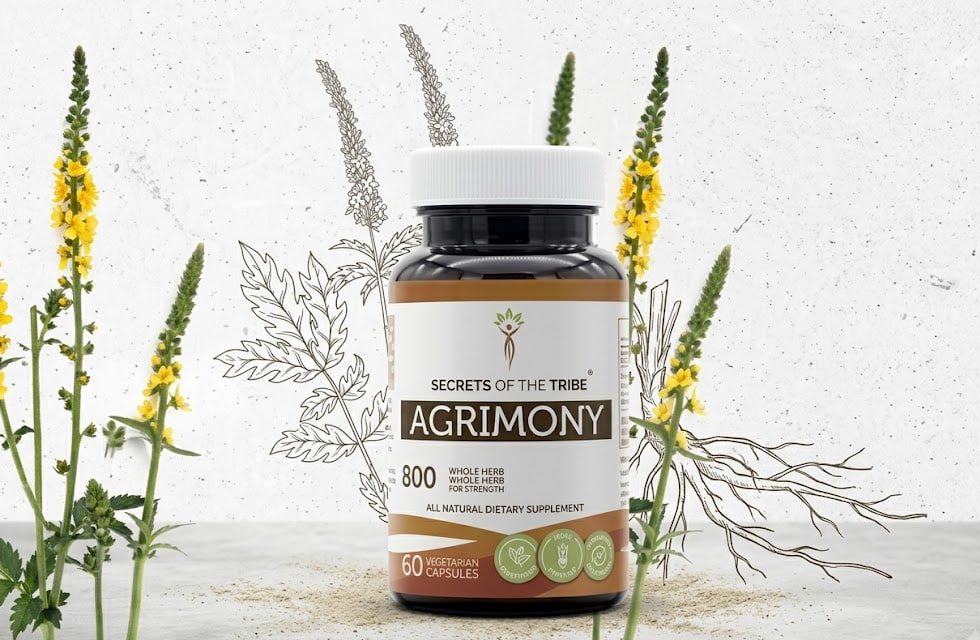
Agrimony vs chamomile is not a comparison between two versions of the same tea. Agrimony usually refers to Agrimonia eupatoria, while chamomile may refer to German chamomile or Roman chamomile. The plants come from different botanical families, use different raw materials, and produce distinct sensory profiles.
This guide explains what goes into each cup, how the flavors differ, and why tea should not be compared directly with a tincture. It also shows you which label details matter before buying either herb.
Are Agrimony and Chamomile the Same Herb?

No. Agrimony and chamomile are botanically separate plants. Their similar use as herbal tea ingredients does not make them interchangeable.
Common agrimony, Agrimonia eupatoria, belongs to the Rosaceae family. This is the same broad botanical family that includes roses, apples, and many other plants. Herbal preparations generally use its dried flowering tops.
German chamomile belongs to the Asteraceae family. Kew accepts the name Matricaria chamomilla, while Matricaria recutita remains common on labels and in European herbal documents. Roman chamomile is another species, Chamaemelum nobile, within the same family.
Because “chamomile” can identify more than one species, the common name alone is incomplete. A useful comparison starts with the Latin botanical name.
What Are the Main Agrimony vs Chamomile Differences?
The main differences involve taxonomy, plant part, aroma, taste, and product format. The table uses German chamomile as the primary chamomile example, but shoppers should confirm the species on each package.
| Comparison point | Agrimony | Chamomile tea |
|---|---|---|
| Typical botanical identity | Agrimonia eupatoria | Matricaria chamomilla, often labeled Matricaria recutita |
| Botanical family | Rosaceae | Asteraceae |
| Common tea material | Dried flowering tops or flowering aerial parts | Dried flower heads |
| Typical aroma | Mild, grassy, earthy, or hay-like | Floral, aromatic, and often apple-like |
| Typical taste | Herbal, mildly bitter, and dry | Floral, softly sweet, and mildly bitter |
| Notable mouthfeel | Astringency may become noticeable | Usually softer, although long steeping can increase bitterness |
| Common formats | Loose herb, tea bags, tinctures, and liquid extracts | Loose flower heads, tea bags, blends, extracts, and topical products |
| Caffeine | Naturally caffeine-free when sold as a single herb | Naturally caffeine-free when sold as a single herb |
These descriptions are sensory guides, not fixed specifications. Species, origin, harvest timing, particle size, storage, and steeping method can change the final cup.
How Does Agrimony Tea Taste?
Agrimony tea usually tastes mild, grassy, earthy, and slightly bitter. It may also leave a dry sensation in the mouth. That sensation is called astringency and should not be confused with bitterness.
Bitterness is a taste. Astringency is a drying or puckering mouthfeel associated with compounds such as tannins. A longer or more concentrated infusion may make both qualities more noticeable.
Agrimony has a quieter aroma than chamomile. People who expect a strongly floral drink may find it plain. Its restrained profile can work in blends, but added ingredients make it harder to judge the herb by itself.
How Does Chamomile Tea Taste?
Chamomile tea generally has a more floral and aromatic profile than agrimony. German chamomile is often described as softly sweet, herbaceous, and apple-like, with a mild bitter edge.
The apple comparison refers strongly to aroma, not just sweetness. Chamomile does not taste like apple juice. Roman chamomile can have a more pronounced aroma and a sharper bitter note, so products labeled only as “chamomile” may not produce the same cup.
Whole flower heads often retain more visible botanical structure than finely cut tea-bag material. However, appearance alone does not establish freshness or quality. Check the species, ingredient list, lot information, and storage guidance.
Which Plant Parts Go Into Agrimony and Chamomile Tea?
Agrimony tea commonly uses dried flowering tops, while chamomile tea commonly uses dried flower heads. This distinction affects identity, composition, appearance, and extraction into hot water.
Agrimony flowering tops
“Flowering tops” usually includes more than flowers. The material may contain upper stems, leaves, buds, and flowers collected while the plant is flowering. A label may also use terms such as herb, aerial parts, or flowering aerial parts.
Chamomile flower heads
A chamomile flower head is a compact structure made of multiple small florets. It includes the familiar white ray florets and yellow central disc florets. Finely processed tea may not preserve the recognizable shape.
Plant-part terms are not decorative label language. Research, specifications, and manufacturing records may apply to one defined botanical material rather than every part of the plant.
How Should Agrimony and Chamomile Tea Be Prepared?
Both herbs are commonly prepared as hot-water infusions, but the package directions should control the amount, water temperature, and steeping time. There is no single brewing rule for every cut size or product.
Agrimony infusion
Place the labeled amount of dried herb in hot water and steep it for the stated period. Taste before extending the brew. Extra time may produce a drier, more bitter cup rather than a simply stronger aroma.
Chamomile infusion
Use the directions supplied with the flowers or tea bags. Covering the vessel can help retain aromatic compounds that would otherwise escape with steam. Strain loose flowers before drinking.
Do not assume that equal spoonfuls provide equal amounts of plant material. Whole chamomile heads, finely cut agrimony, and powdered tea have different bulk densities. A kitchen scale offers a more consistent comparison when the label gives weight-based instructions.
Why Is Agrimony Tea Different From a Liquid Extract?
Tea and liquid extract are separate preparation formats. Tea uses water during brewing. A tincture or liquid extract may use water, ethanol, glycerin, or a combination of carriers during manufacturing.
Readers comparing tea ingredients with tinctures can use a liquid Agrimony option as an Agrimony-format reference. The comparison should focus on the botanical name, plant part, carrier, extraction ratio, serving information, and storage directions. A dropper serving cannot be converted into a cup of tea without product-specific manufacturing data.
An extraction ratio also needs context. It may describe the relationship between botanical material and finished extract, but it does not by itself show that a liquid and a tea contain identical proportions of every constituent.
How Should You Compare Agrimony and Chamomile Labels?
Start with identity, not marketing language. A complete label should make it possible to determine what plant is present, which part was used, and how the product should be prepared.
For agrimony, look for a full name such as Agrimonia eupatoria. For chamomile, determine whether the product contains German chamomile, Roman chamomile, or a blend. Then check whether the package specifies flower heads, flowering tops, aerial parts, powder, or extract.
Read the full ingredient panel. A tea marketed around one herb may contain flavors, sweeteners, caffeine-containing tea leaves, or additional botanicals. These additions change the taste and make a direct single-herb comparison less reliable.
Herbal Tea Comparison Checklist
Use this checklist when comparing agrimony and chamomile products. It separates botanical identity from taste preferences and format differences. Complete every step before comparing price or package design.
Confirm the species
Find the Latin binomial on the label. Do not rely on “agrimony” or “chamomile” alone when species identity matters.
Identify the plant part
Check for flowering tops, aerial parts, flowers, or flower heads. Research about one plant part may not describe another material.
Classify the format
Determine whether the product is loose tea, a tea bag, powder, tincture, or another liquid extract. Compare products within the same format first.
Read every ingredient
Look for added herbs, flavors, sweeteners, carriers, and caffeine-containing ingredients. A blend will not taste or prepare like a single-herb product.
Follow the brewing directions
Use the listed amount, temperature, and steeping time. Record any change you make so the next cup remains comparable.
Compare aroma and mouthfeel
Separate fragrance, sweetness, bitterness, and astringency. These are different sensory qualities and may respond differently to longer steeping.
Check warnings and storage
Review allergen statements, age guidance, package seals, and storage conditions. Ask a qualified professional if personal circumstances make the label unclear.
Why Is Ashwagandha and Alcohol a Separate Label Question?
Ashwagandha and Alcohol belongs to a different supplement comparison, but it illustrates the same need for precise format language. “Alcohol” may describe the carrier used in a botanical tincture or a separate alcoholic beverage. Those situations are not equivalent. Anyone avoiding alcohol or considering a product alongside medicines should check the complete ingredient panel and seek individual guidance where appropriate.
FAQ
Are agrimony and chamomile the same plant?
No. Agrimony commonly refers to Agrimonia eupatoria in the Rosaceae family. German and Roman chamomile belong to the Asteraceae family.
Which part of agrimony is used for tea?
Agrimony tea commonly uses dried flowering tops. This material can include flowers, leaves, and upper stems.
Which part of chamomile is used for tea?
Chamomile tea commonly uses dried flower heads. The exact species should appear on the label.
Does agrimony taste like chamomile?
No. Agrimony usually tastes grassy, mildly bitter, and astringent. Chamomile is typically more floral and aromatic, often with an apple-like note.
Can agrimony and chamomile be brewed together?
They can appear in herbal blends, but follow the product directions. Combining them makes it harder to evaluate each herb’s individual taste.
Is agrimony tincture the same as agrimony tea?
No. Tea is a hot-water infusion, while a tincture uses a manufactured solvent system and product-specific extraction process.
Does chamomile tea contain caffeine?
Pure chamomile is naturally caffeine-free. Check blended products because they may include caffeine-containing tea leaves or other ingredients.
Which tea is better?
Neither is universally better. Choose according to verified species, preferred taste, preparation method, label clarity, and personal suitability.
Glossary
Astringency
A dry or puckering mouthfeel that differs from bitterness.
Botanical name
A two-part scientific name used to identify a plant’s genus and species.
Capitulum
The flower-head structure found in chamomile and other members of the Asteraceae family.
Carrier
A liquid such as water, ethanol, or glycerin used in an extract.
Flowering tops
The upper plant material collected during flowering, often including stems, leaves, buds, and flowers.
Infusion
A preparation made by steeping botanical material in water.
Single-herb tea
A tea containing one declared botanical ingredient rather than a multi-herb blend.
Tincture
A liquid botanical preparation commonly made with alcohol and water or another stated carrier system.
Volatile compounds
Aromatic substances that can evaporate during storage or brewing.
Conclusion
Agrimony and chamomile differ in species, family, plant part, flavor, and product format. Confirm the botanical name and preparation type before comparing either tea or liquid extract.
Sources Used
- Accepted taxonomy and family for Agrimonia eupatoria, Plants of the World Online – powo.science.kew.org/taxon/316550-2
- Accepted taxonomy for Matricaria chamomilla, Plants of the World Online – powo.science.kew.org/taxon/154715-2
- Accepted taxonomy for Chamaemelum nobile, Plants of the World Online – powo.science.kew.org/taxon/192489-1
- Agrimony botanical material and preparation formats, Agrimoniae herba – ema.europa.eu/en/medicines/herbal/agrimoniae-herba
- German chamomile identity and flower material, Matricariae flos – ema.europa.eu/en/medicines/herbal/matricariae-flos
- Roman chamomile identity and flower material, Chamomillae romanae flos – ema.europa.eu/en/medicines/herbal/chamomillae-romanae-flos
- Chamomile botanical identity and sensory description, Botanical Identity References Compendium – botanicalauthentication.org/index.php/Matricaria_recutita_(flower)
- Retail example of a liquid Agrimony format, Agrimony Tincture product page – secrets.shop/products/agrimony-tincture