

Pumpkin seeds vs pepitas is mostly a question of terminology, seed structure, and product labeling. The words sometimes refer to the same edible kernel, but they are not used consistently across recipes and American food packages. This guide explains the white hull, green kernel, naturally hull-less varieties, and separate supplement formats. HerbEra treats the food name as a starting point, not proof of the exact species or processing method.
The short answer is that every pepita is a pumpkin or squash seed, but not every product called pumpkin seeds looks like the green kernels commonly sold as pepitas. Pumpkin seeds may retain a pale outer hull, have that hull removed mechanically, or come from a variety that develops only a thin seed coat.
Are pepitas and pumpkin seeds the same thing?
They can be, but the terms emphasize different forms of the ingredient.
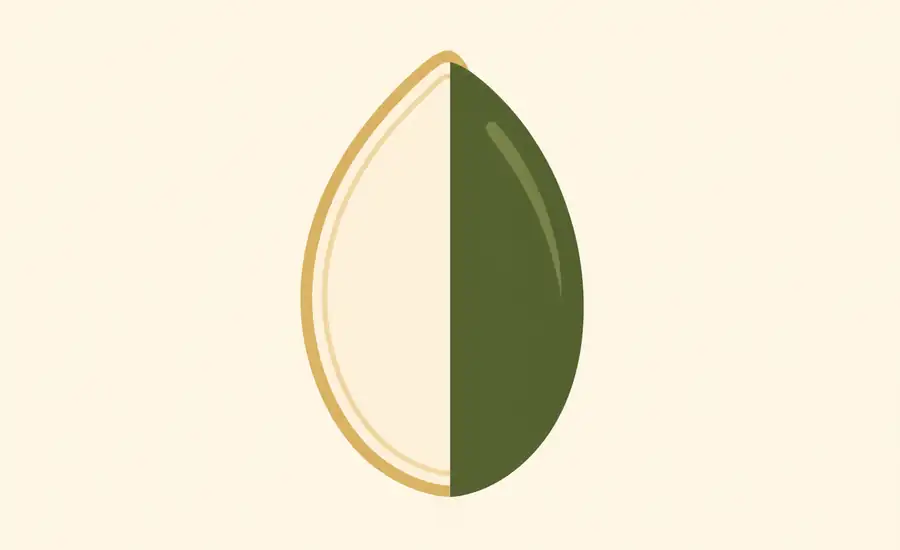
Pumpkin seed is the broad English term for an edible seed from a pumpkin or related squash. It may describe the complete seed with a pale outer hull or the green kernel after the hull has been removed.
Pepita comes from Spanish and refers to an edible pumpkin or squash seed. In modern American food use, the word commonly identifies a green kernel without a hard white hull. The kernel may have been mechanically dehulled, or it may come from a naturally hull-less pumpkin variety.
Dictionaries and retailers do not always draw the boundary in the same place. Some use pepita for any edible pumpkin seed. Others reserve it for the green, shell-free form. The package description therefore matters more than the word alone.
| Term | Typical US meaning | Possible ambiguity |
|---|---|---|
| Pumpkin seeds | Whole seeds with pale hulls or edible green kernels | The label may not specify whether the hull remains |
| Pepitas | Green pumpkin or squash seed kernels without hard white hulls | May be mechanically dehulled or naturally hull-less |
| Hulled pumpkin seeds | Kernels after removal of the outer hull | Hulled means the hull has been removed, not retained |
| Hull-less pumpkin seeds | Seeds from a variety that does not form a thick, lignified hull | The seed still has thin protective tissue |
| Shell-on pumpkin seeds | Complete seeds with the pale outer layer intact | The shell may be eaten or discarded depending on texture |
What is the white shell around a pumpkin seed?
The pale outer layer is the seed coat, commonly called the hull or shell. It surrounds the green kernel.
Seeds removed from carving or pie pumpkins often have a flat, oval shape and a white or cream-colored hull. Inside that hull is the softer green kernel that resembles a commercial pepita.
The terms hull and shell are often used interchangeably in food marketing. Botanically, seed coat or testa is more precise. For shoppers, the practical question is whether the product includes the firm outer layer.
A shell-on seed has more structural material than a dehulled kernel. This affects texture, edible weight, preparation, and nutrition comparisons. Data for a measured serving of kernels should not be assigned to the same package weight of shell-on seeds.
Are naturally hull-less seeds different from dehulled pepitas?
Yes. They may look similar after processing, but they reach that form in different ways.
Mechanically dehulled kernels
A processor can remove the firm outer hull from conventional pumpkin or squash seeds. The remaining green kernel may then be sold as hulled pumpkin seeds or pepitas.
Mechanical dehulling changes the physical form but not the botanical variety from which the seed originated. The product label may not identify the dehulling method.
Naturally hull-less varieties
Some pumpkin cultivars produce seeds without a thick, strongly lignified hull. These are described as hull-less, naked-seeded, or thin-coated varieties.
Hull-less does not mean that the embryo grows without any protective seed tissue. Research on Cucurbita pepo shows that seed coat layers remain present, but their structure and lignification differ from conventional thick-hulled seeds.
Styrian oil pumpkins are a familiar example of pumpkins selected for green, hull-less seeds. Other hull-less cultivars also exist. The visual appearance alone may not establish the exact cultivar.
Do all pepitas come from the same pumpkin species?
No. The common name does not guarantee one species or cultivar.
Cucurbita pepo is a major source of edible pumpkin seeds and includes recognized hull-less cultivars. However, pumpkin and squash are broad common names used for cultivated plants from several Cucurbita species.
Research has also documented hull-less seed traits in Cucurbita maxima. A retail package labeled pepitas may not state whether the kernels came from Cucurbita pepo, Cucurbita maxima, or another food-grade squash source.
Species-level identification matters when connecting a product to botanical research. It matters less in an ordinary recipe where the goal is a mild, green seed kernel with a particular texture.
How should American shoppers read a pepita label?
Start with the statement of identity, ingredient list, and Nutrition Facts panel. Front-label imagery may not show whether the seed has a hull.
Product name
Look for terms such as pepitas, pumpkin seed kernels, hulled pumpkin seeds, or shell-on pumpkin seeds. A clear label may use more than one term, such as roasted pepitas followed by hulled pumpkin seeds in parentheses.
Ingredient list
Plain products may list only pumpkin seeds. Roasted or flavored versions can include oil, salt, sugar, spices, flavorings, or preservatives. Ingredients generally appear in descending order by weight on US packaged foods.
Nutrition Facts panel
Compare serving weights rather than only household measures. One brand may define a serving by tablespoons, while another uses a fraction of a cup. The gram weight provides the clearer basis.
Processing terms
Raw, sprouted, roasted, dry-roasted, oil-roasted, salted, and flavored describe different finished foods. Roasting and added ingredients can change the label values and culinary behavior.
Country and regional usage
Pepita appears frequently on US labels, especially for green kernels. Other markets may prefer pumpkin seed, squash seed, or a translated regional name. Imported products may follow different naming customs and labeling rules.
Do pumpkin seeds and pepitas have the same nutrition?
They can have similar core nutrients when the edible kernel and serving weight match. Differences appear when the hull, roasting method, salt, or added oil changes.
The green kernel contains naturally occurring fats, protein, carbohydrates, minerals, and other seed constituents. A shell-on seed includes additional structural material from the seed coat. Comparing equal package weights can therefore produce a misleading result if one serving includes discarded hulls.
Nutrition databases also separate raw kernels, roasted kernels, salted seeds, and whole seeds into different entries. Select the description that matches the actual food.
The word pepita does not create a special nutrient category. A plain pepita and a plain dehulled pumpkin kernel may be the same food under different names. A seasoned pepita snack is a different finished product from an unsalted raw kernel.
Can pepitas replace pumpkin seeds in recipes?
Usually, if the recipe means dehulled pumpkin kernels. The substitution is less direct when a recipe expects seeds with intact hulls.
Pepitas work well in granola, bread, salads, sauces, seed butter, baked goods, and toppings. Their green color and relatively tender texture make them easy to use without shelling.
Whole seeds from a carved pumpkin may be roasted with their hulls intact. They have a firmer texture and require different preparation. Replacing them with pepitas will change the appearance, crunch, and sometimes the cooking time.
Check whether the recipe uses pumpkin seeds as a garnish, ground ingredient, thickener, or snack. The function determines whether the forms are interchangeable.
What changes when pumpkin seed becomes oil, powder, or tincture?
The product stops being a direct whole-food comparison. Each processing method separates or concentrates a different portion of the seed.
| Format | What it contains | What to verify |
|---|---|---|
| Shell-on seed | Kernel and firm outer seed coat | Edible portion, roasting, salt, serving weight |
| Pepita or hulled kernel | Green edible kernel without a hard outer hull | Raw or roasted form, added ingredients, serving weight |
| Seed flour or protein powder | Milled seed material, sometimes partly defatted | Protein, fiber, fat, processing, additives |
| Pumpkin seed oil | Lipid fraction obtained from the seed | Species, pressing method, refining, serving volume |
| Liquid extract | Selected constituents transferred into a liquid carrier | Species, seed part, solvent, ratio, serving unit |
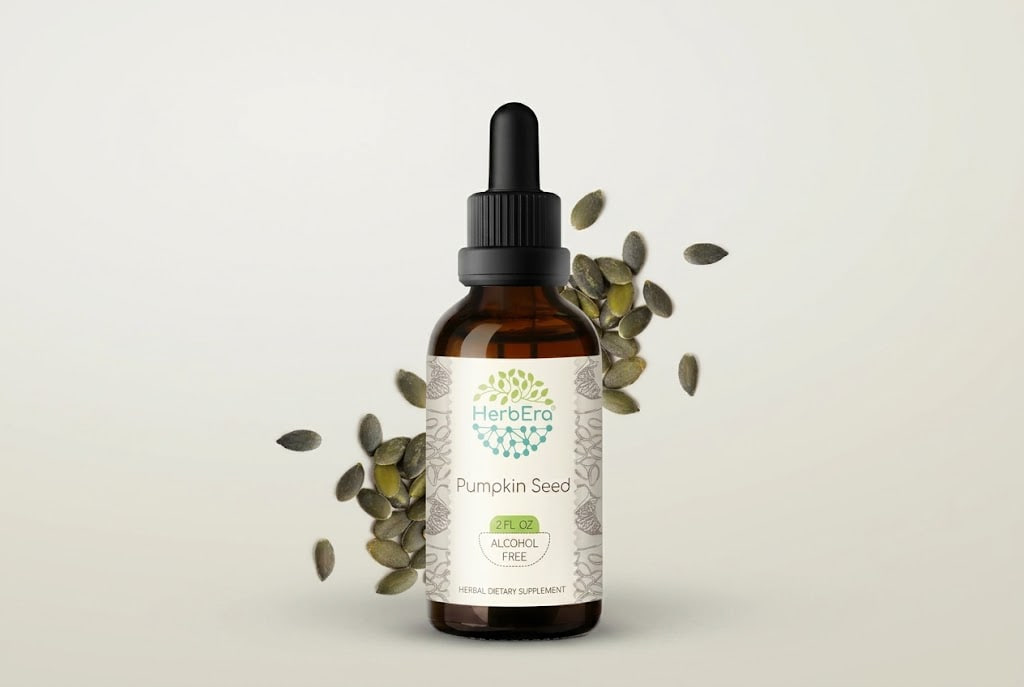
After the food terminology is clear, HerbEra presents this liquid pumpkin seed product as a separate supplement format rather than a liquefied serving of pepitas. A filtered extract should not be assigned the full fiber, protein, fat, or mineral profile of whole kernels without product-specific data.
Oil also differs from both foods and tinctures. Pressing separates the lipid-rich portion from much of the solid seed material. A tincture uses a declared liquid carrier to extract a different range of constituents.
Why do serving units matter in product comparisons?
A tablespoon, ounce, gram, milliliter, capsule, and dropper measure different things. The underlying material must match before the numbers become comparable.
For foods, compare equal edible gram weights. For oils, compare equivalent volumes or weights and check whether the oil is pure or blended. For extracts, compare the botanical amount, liquid volume, carrier, and extract ratio when stated.
Do not estimate the nutrition of a liquid supplement from a database entry for roasted pepitas. The seed source may be related, but the delivery format and composition are different.
Pumpkin Seed Label Checklist
Use this checklist to determine whether a package contains shell-on seeds, pepitas, naturally hull-less seeds, or a processed supplement. It keeps terminology separate from verified product details.
Read the complete product name
Look for pepitas, kernels, hulled, hull-less, shell-on, oil, powder, or extract.
Check the visual form
Green kernels usually lack a hard pale hull. White or cream-colored seeds generally retain the outer seed coat.
Review the ingredient list
Identify added oil, salt, sweeteners, seasonings, carriers, and preservatives.
Compare edible weight
Use gram weights and account for any shell that is normally discarded.
Identify the processing method
Note whether the seeds are raw, roasted, sprouted, milled, pressed, or extracted.
Look for a botanical name
Species information is especially useful for supplements and research comparisons.
Separate food from supplement data
Do not transfer whole-seed nutrition values to oils, capsules, or liquid extracts.
Match research to the format
Confirm that the study used the same species, seed form, processing method, and serving basis.
FAQ
Are pepitas pumpkin seeds?
Yes. Pepitas are edible pumpkin or squash seeds, commonly sold in the United States as green kernels without hard white hulls.
Why are pumpkin seeds white but pepitas green?
The white part is the outer seed coat. The green pepita is the kernel inside, or a seed from a hull-less variety with only a thin coat.
Do pepitas grow without shells?
Some come from naturally hull-less cultivars. Others are conventional pumpkin seeds that have been mechanically dehulled.
Are pepitas always from Cucurbita pepo?
No. Cucurbita pepo is a common source, but the term pepita does not guarantee one species or cultivar.
Can pepitas replace shelled pumpkin seeds?
Yes. Pepitas and shelled pumpkin kernels are usually interchangeable when a recipe calls for the green edible kernel.
Can pepitas replace shell-on pumpkin seeds?
Sometimes, but the texture and appearance will change because pepitas lack the firm pale hull.
Are raw and roasted pepitas nutritionally identical?
No. Roasting conditions and added salt or oil can change the finished product and its label values.
Is pumpkin seed oil the same as pepitas?
No. Pumpkin seed oil is the extracted lipid fraction, while pepitas are solid edible kernels.
Does pumpkin seed tincture contain whole pepitas?
No. A tincture is a filtered liquid extract and should not be described as the complete whole-seed matrix.
Glossary
Cultivar
A cultivated plant variety selected for particular traits.
Dehulled
Processed to remove the outer hull or seed coat.
Hull
The firm outer covering around a conventional pumpkin seed kernel.
Hull-less
A seed trait in which the outer coat does not become thick and strongly lignified.
Kernel
The edible inner portion of a seed after removal of a firm outer hull.
Lignification
The process by which plant cell walls become firmer through the deposition of lignin.
Pepita
An edible pumpkin or squash seed, commonly referring to a green kernel without a hard white hull.
Seed coat
The protective tissue around the seed, also called the testa.
Tincture
A filtered liquid botanical extract commonly made with water, ethanol, glycerin, or a combination of carriers.
Conclusion
Pepitas are pumpkin or squash seeds, but US usage usually points to the green kernel rather than the complete white-hulled seed. Read the label for hull status, species, processing, and format before comparing products.
Sources Used
- Definition and modern usage of pepita, Merriam-Webster Dictionary - merriam-webster.com/dictionary/pepita
- US meaning of pepita and shell-free usage, Cambridge English Dictionary - dictionary.cambridge.org/us/dictionary/english/pepita
- Pumpkin species and hull-less garden varieties, University of Minnesota Extension - extension.umn.edu/vegetables/pumpkins-and-winter-squash
- Seed coat development in conventional and hull-less Cucurbita pepo, USDA Agricultural Research Service - ars.usda.gov/ARSUserFiles/60800500/CGC/CGC%205%20%281982%29.pdf
- Hull-less seed trait in Cucurbita maxima, Cucurbit Genetics Cooperative - ars.usda.gov/ARSUserFiles/60800500/CGC/cgc3334-1to24.pdf
- Pumpkin seed and botanical naming records, FDA Global Substance Registration System - precision.fda.gov/ginas/app/ui/substances/GH30P1VXK2
- Common and usual names in US ingredient lists, FDA Food Labeling Guide - fda.gov/regulatory-information/search-fda-guidance-documents/guidance-industry-food-labeling-guide
- Food composition records for pumpkin seeds and kernels, FoodData Central - fdc.nal.usda.gov