

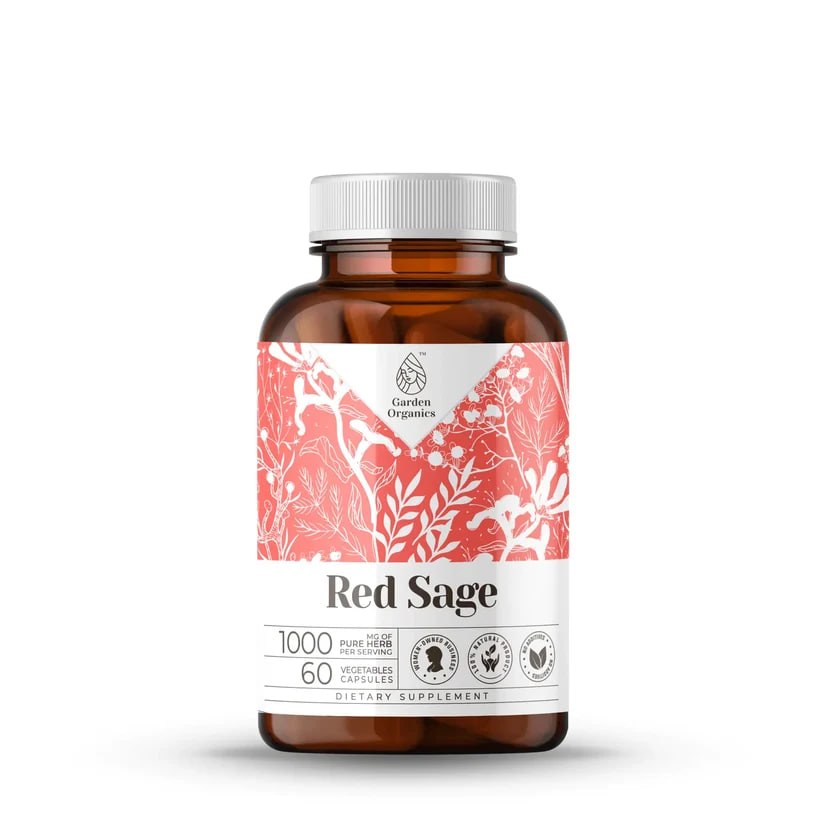
The red sage vs beetroot supplement comparison involves two unrelated plants and several product formats. Red sage commonly refers to the root and rhizome of Salvia miltiorrhiza. Beetroot products come from cultivated forms of Beta vulgaris and may appear as whole powder, juice, concentrate, dehydrated juice, or nitrate-declared preparations.
Garden Organics treats format as a primary evidence field. A botanical capsule and a concentrated beetroot drink cannot be compared from the front-panel name alone. The label must show what material the product contains and what the serving amount represents.
Are red sage and beetroot botanically related?
No. Red sage belongs to the mint family, Lamiaceae. Beetroot belongs to Amaranthaceae, the same family that includes spinach and quinoa. The two plants have different taxonomy, cultivation histories, source materials, and constituent profiles.
Red sage is a perennial herb. Formal references commonly define its commercial botanical material as dried root and rhizome. Beetroot comes from cultivated forms of Beta vulgaris. The harvested swollen structure includes root tissue and the hypocotyl, which is the area between the root and stem.
| Comparison point | Red sage | Beetroot |
|---|---|---|
| Typical botanical identity | Salvia miltiorrhiza Bunge | Beta vulgaris L. |
| Plant family | Lamiaceae | Amaranthaceae |
| Commercial source material | Root and rhizome | Swollen beetroot structure, juice, or derived concentrate |
| Common formats | Root powder, capsules, dry extract, liquid extract | Whole powder, juice, concentrate, shot, juice powder, capsules |
| Common specification focus | Species, plant part, extract ratio, solvent, botanical amount | Serving volume, beetroot amount, juice concentration, nitrate amount |
| Primary comparison risk | Assuming a capsule matches a studied extract | Assuming all red powders and juices provide the same nitrate amount |
Which Red Sage supplement formats are available?
Red sage products commonly use powdered root material or an extract made from root and rhizome. The finished product may be a capsule, tablet, loose powder, or liquid preparation.
Plain root powder
A plain powder consists of dried botanical material reduced to smaller particles. Its declared weight usually refers to the ground plant material rather than a concentrated extract.
Dry extract capsules
A dry extract starts with botanical material processed in a solvent. The solvent is later removed. A useful label identifies the extract weight and may include the extraction ratio, solvent, or equivalent amount of starting material.
Liquid extracts
A liquid extract retains the botanical preparation in water, ethanol, glycerin, or another carrier. Volume alone does not reveal how much starting botanical material the serving represents.
Products within these three categories are not automatically interchangeable. A study of a defined water extract does not directly describe plain root powder or an extract made with a different solvent.
Which beetroot product formats need to be separated?
Beetroot is sold across the boundary between conventional food and dietary supplements. A bottle of juice may use a standard food label, while capsules or scoop-based powders may carry a Supplement Facts panel. The regulatory format does not reveal the nitrate amount by itself.
Whole beetroot powder
Whole beetroot powder generally comes from dried and milled beet material. It may retain more of the original food matrix than a filtered juice powder. Its weight does not provide a reliable nitrate value unless the label declares nitrate or the batch has been analyzed.
Beetroot juice
Beetroot juice is the liquid separated from processed beet material. Products may be sold ready to drink or mixed with other juices. Serving size, added ingredients, and concentration can vary.
Juice concentrate and shots
A concentrate contains less water than ordinary juice. A small shot can therefore represent a different quantity of starting juice than the same volume of a non-concentrated beverage. The package should state the serving volume and any declared nitrate amount.
Beetroot juice powder
Juice powder is made by drying beetroot juice or concentrate. It is not necessarily equivalent to whole beetroot powder. The removal of insoluble material and the drying process create a different ingredient format.
Nitrate-declared products
A nitrate-focused product states a nitrate amount per serving, often in milligrams or millimoles. That declaration makes the nitrate content more visible, but it does not describe every other constituent in the beetroot material.
Does beetroot powder guarantee a specific nitrate amount?
No. Beetroot can contain naturally occurring nitrate, but the amount varies by cultivar, agricultural conditions, processing, storage, serving size, and production batch. NIH materials also note considerable variation among beetroot products.
A red color, large beetroot weight, or concentrated flavor does not prove a specific nitrate quantity. Beet pigments are betalains, while nitrate is a separate colorless ion. Color intensity cannot serve as a nitrate test.
Independent analyses of commercial beetroot juice products have found differences among powders, mixed beverages, concentrates, and bulk juices. This variation is why product-specific research should report the measured nitrate amount or provide enough batch information to reproduce the preparation.
| Label statement | What it establishes | What remains unknown |
|---|---|---|
| Beetroot powder, 5 g | Weight of the declared beetroot ingredient | Nitrate amount unless separately stated |
| Beetroot juice, 250 mL | Volume of the beverage serving | Juice concentration and nitrate amount |
| Beetroot concentrate, 70 mL | Volume of the concentrated product | Starting-juice equivalent unless declared |
| Nitrate, 400 mg | Declared nitrate quantity per serving | Complete beetroot constituent profile |
| Standardized beetroot | A specification may control a named marker | The specification when no marker or range appears |
Can Red Sage capsules and beetroot products be compared by weight?
Not by weight alone. Milligrams of red sage root powder and milligrams of beetroot juice powder describe different botanical materials. Even two beetroot products with the same gram weight may contain different nitrate amounts.
The comparison becomes less direct when one label declares raw botanical weight and another declares a measured constituent. For example, a nitrate amount cannot be converted into an equivalent amount of red sage. The figures measure different things.
Because beetroot products vary widely by format, they should be compared carefully with the linked Red Sage product. Its retail page identifies a capsule format and red sage root, but the current physical label should confirm the Latin name, ingredient amount, serving size, and powder or extract status.
Garden Organics would document that product separately from beetroot powders and beverages. Only after recording both specifications should an editor compare format, labeling completeness, or similarity to a studied preparation.
When can research be connected to a beetroot product?
A beetroot study may use freshly prepared juice, bottled juice, juice concentrate, reconstituted powder, or a nitrate-controlled preparation. These formats should remain separate evidence categories unless the study provides a direct comparison.
Match the source material
Determine whether the study used whole beetroot, filtered juice, concentrate, or dried juice. A scoop of whole powder may not reproduce the composition of a juice-based preparation.
Match the nitrate declaration
If a study reports nitrate per serving, look for the same measurement on the product label or in batch documentation. Do not estimate nitrate from beetroot grams alone.
Match the serving format
Check whether participants consumed a liquid, reconstituted powder, capsule, or another preparation. The serving unit and concentration should match the retail product closely.
Match the batch information
Naturally variable ingredients can differ across lots. Research is easier to interpret when the product, batch, analytical method, and measured constituent amount are reported.
When can research be connected to a Red Sage product?
The same matching rules apply to red sage. Confirm the species, root or rhizome declaration, extract type, solvent, ratio, and amount. A common name and capsule shell provide too little information.
Formal red sage assessments describe multiple preparations rather than one universal extract. Research using a particular solvent or manufacturing process should not be assigned to every red sage capsule.
This comparison can establish whether a retail label resembles a studied material. It cannot establish an individual outcome or rank one ingredient above the other.
Red Sage and Beetroot Product Checklist
Use this checklist to separate botanical identity from product format. Complete every step for each product before comparing serving amounts or research relevance.
Confirm the botanical name
Record the genus and species. Check whether the beet ingredient specifically identifies Beta vulgaris.
Identify the source material
Note root, rhizome, whole beetroot, juice, concentrate, or juice powder. Do not combine these categories.
Classify the format
Separate capsules, loose powders, ready-to-drink juices, shots, and liquid extracts.
Read the serving unit
Record capsules, grams, milliliters, scoops, or another stated unit. Use the complete serving rather than one package unit when they differ.
Capture the ingredient amount
Determine whether the figure describes raw botanical material, total extract, juice volume, or a concentrated ingredient.
Check the nitrate declaration
For nitrate-focused products, record the stated amount and unit. Mark the value as unknown when the label does not declare it.
Review other ingredients
Look for added juices, sweeteners, flavors, carriers, capsule materials, and other botanical ingredients.
Match the studied preparation
Compare species, material, processing, serving unit, and measured constituents. Describe any mismatch before summarizing the evidence.
FAQ
Are red sage and beetroot the same plant?
No. Red sage usually means Salvia miltiorrhiza, while beetroot is a cultivated form of Beta vulgaris.
Is beetroot powder the same as beetroot juice powder?
Not necessarily. Whole powder comes from dried beet material, while juice powder comes from dehydrated juice or concentrate.
Does every beetroot supplement declare nitrate?
No. Many products declare only the amount of beetroot powder, juice, or concentrate.
Can nitrate content be estimated from beetroot color?
No. Beet color comes mainly from betalain pigments, not nitrate.
Can two beetroot products with equal gram weights be considered equivalent?
No. Their processing, water content, juice concentration, and nitrate amount may differ.
Can beetroot nitrate be compared with Red Sage milligrams?
No. One value describes a selected beetroot constituent, while the other may describe botanical powder or extract.
Does a capsule format make Red Sage easier to compare with beetroot capsules?
No. The capsule is only the delivery format. Species, source material, processing, and declared amounts still differ.
Glossary
Botanical identity
The verified scientific identity of a plant ingredient.
Hypocotyl
The plant structure between the root and stem that contributes to the swollen beetroot form.
Whole beetroot powder
Dried and milled beet material rather than dehydrated juice.
Juice concentrate
Juice from which part of the water has been removed.
Nitrate
A naturally occurring inorganic ion found in varying amounts in vegetables, including beets.
Betalains
Pigments responsible for much of the red or yellow color in beetroot.
Extract ratio
The relationship between the starting botanical material and the finished extract.
Evidence matching
The process of comparing a studied preparation with a retail product specification.
Conclusion
Red sage capsules and beetroot products represent different botanical and format categories. Compare species, source material, processing, serving units, nitrate declarations, and study specifications before making product-level statements.
Sources Used
- Accepted taxonomy and classification of Salvia miltiorrhiza - powo.science.kew.org/taxon/urn:lsid:ipni.org:names:456707-1
- Accepted taxonomy, cultivar groups, and structure of Beta vulgaris - powo.science.kew.org/taxon/urn:lsid:ipni.org:names:164505-1
- European assessment overview for Salvia miltiorrhiza root and rhizome - ema.europa.eu/en/medicines/herbal/salviae-miltiorrhizae-radix-et-rhizoma
- NIH description of beetroot juice, concentrate, powder, and nitrate variability - ods.od.nih.gov/factsheets/ExerciseAndAthleticPerformance-HealthProfessional
- NIH background on botanical powders, liquid preparations, and extracts - ods.od.nih.gov/factsheets/BotanicalBackground-Consumer
- Analysis of nitrate variation across commercial beetroot juice products - pmc.ncbi.nlm.nih.gov/articles/PMC8512783
- FDA guidance on plant-part, serving, and extract declarations - fda.gov/food/dietary-supplements-guidance-documents-regulatory-information/dietary-supplement-labeling-guide-chapter-iv-nutrition-labeling
- Retail page reviewed for the Red Sage capsule example - gardenix.com/products/red-sage-capsules